Carfrae
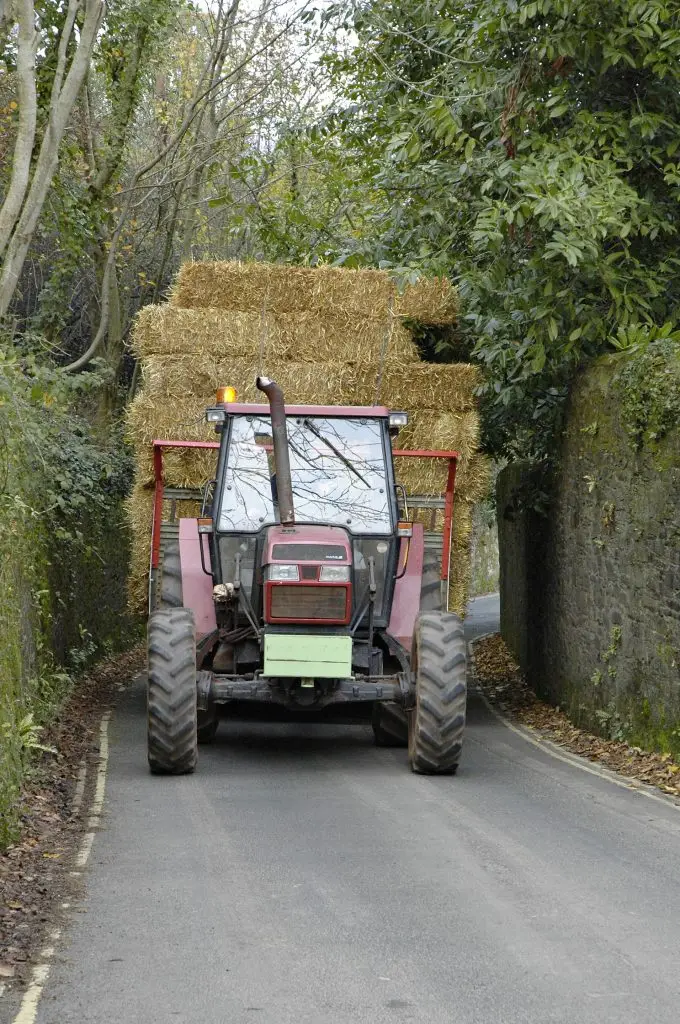
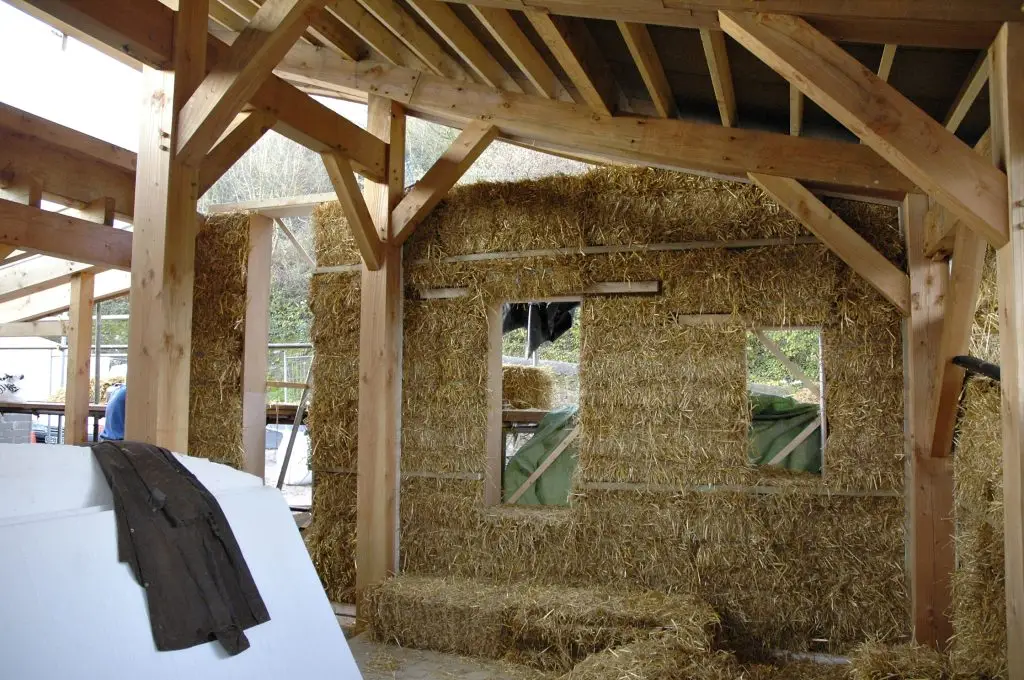
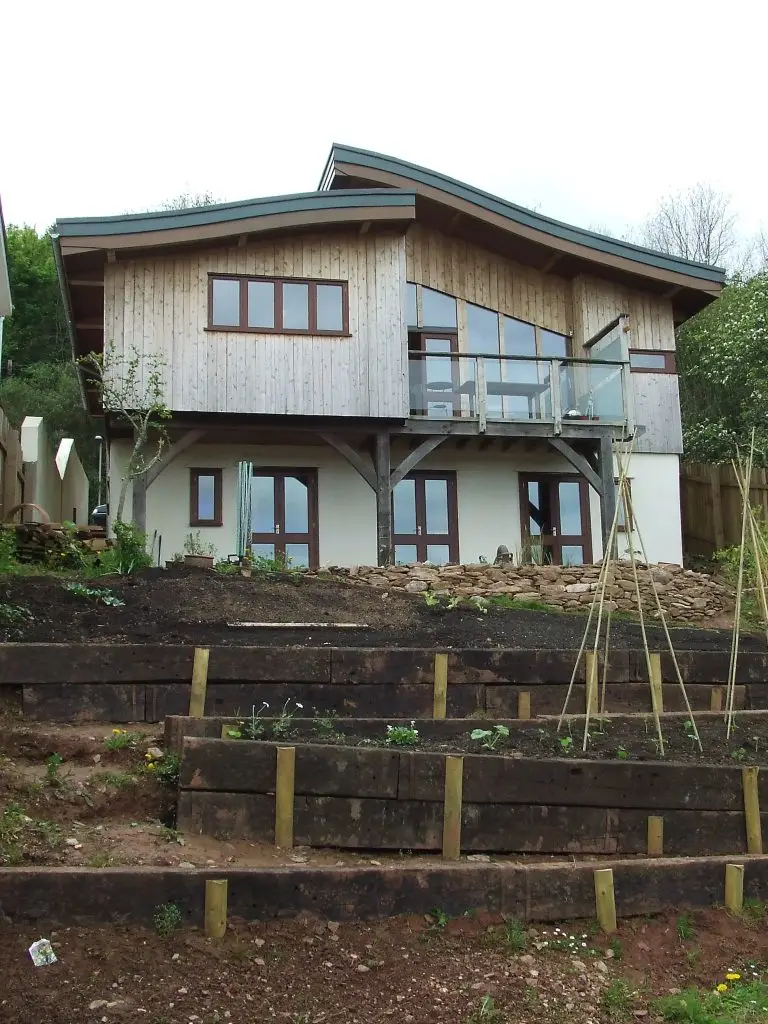
We worked very closely with our client, Jim Carfrae, who wished to carefully build a very ecologically friendly affordable house on a sloping site near Totnes, Devon, using straw bales and a Douglas Fir primary frame. The genesis of this building took lots of time, but meant that it was very well considered and better for it. It’s an excellent example of how low impact materials can be used reliably in affordable modern buildings. Jim was so invested in measuring the performance of the straw walls that he built in sensors to monitor the performance of the building, particularly concerning moisture levels which can terminally damage straw bale construction. He used his data and research to gain a PhD, and has since consulted on similar projects. We enjoyed working with Jim in the development of these ideas and techniques and have continued to present the merits of the simple combination of structural primary frames to support the floors and roofs with straw bales walls successfully with other clients, and are keen to build more like it.
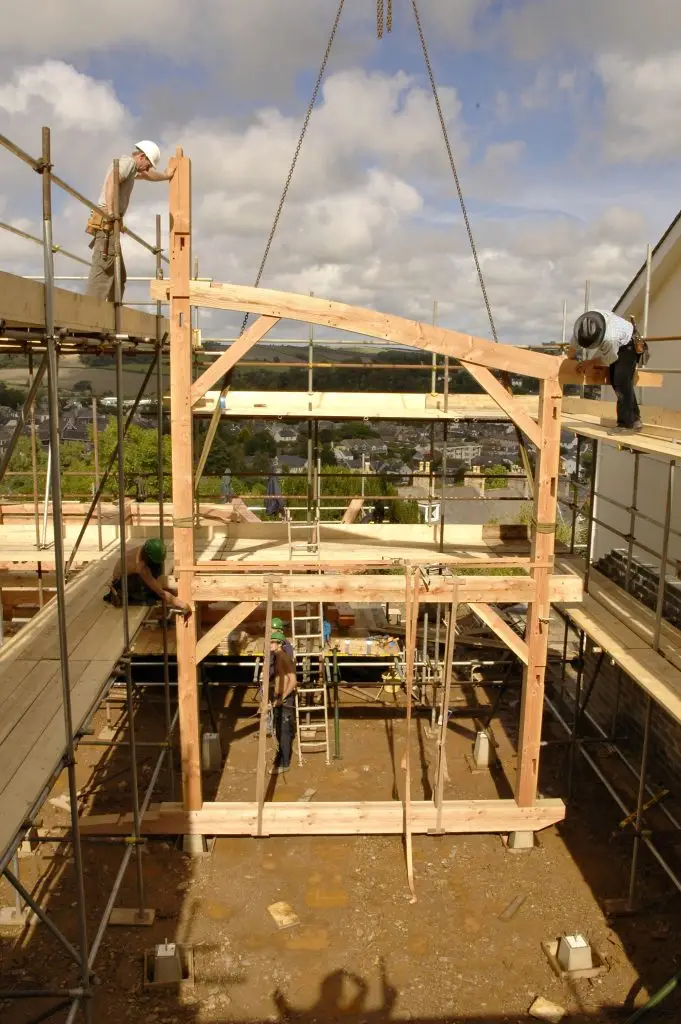
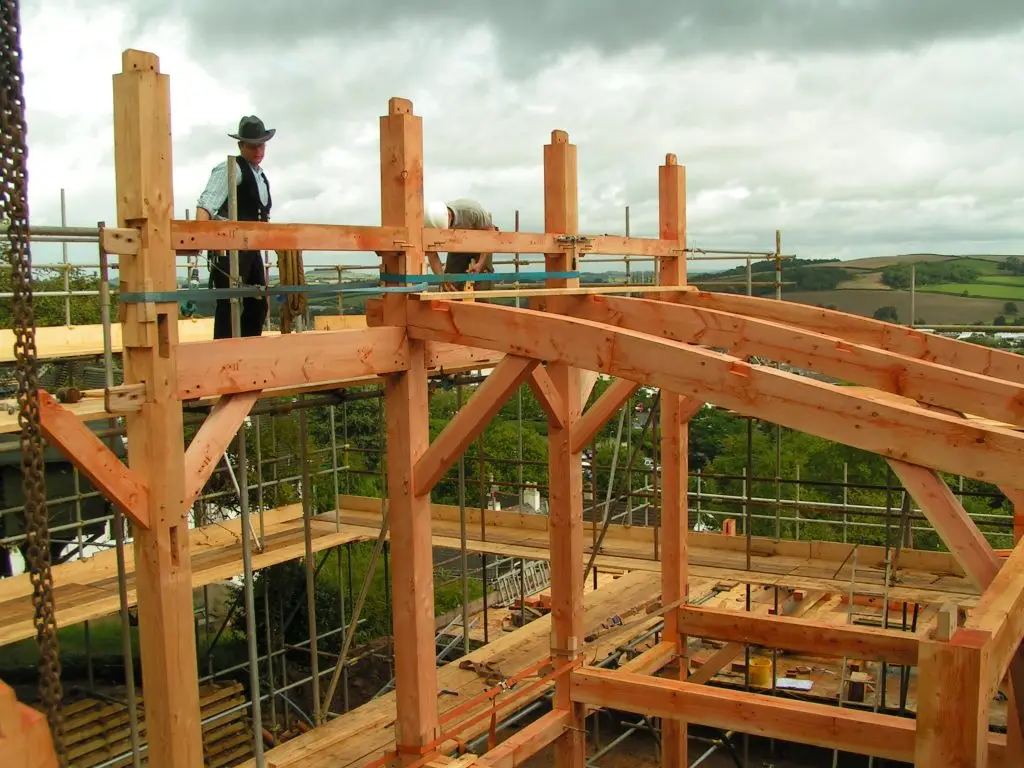
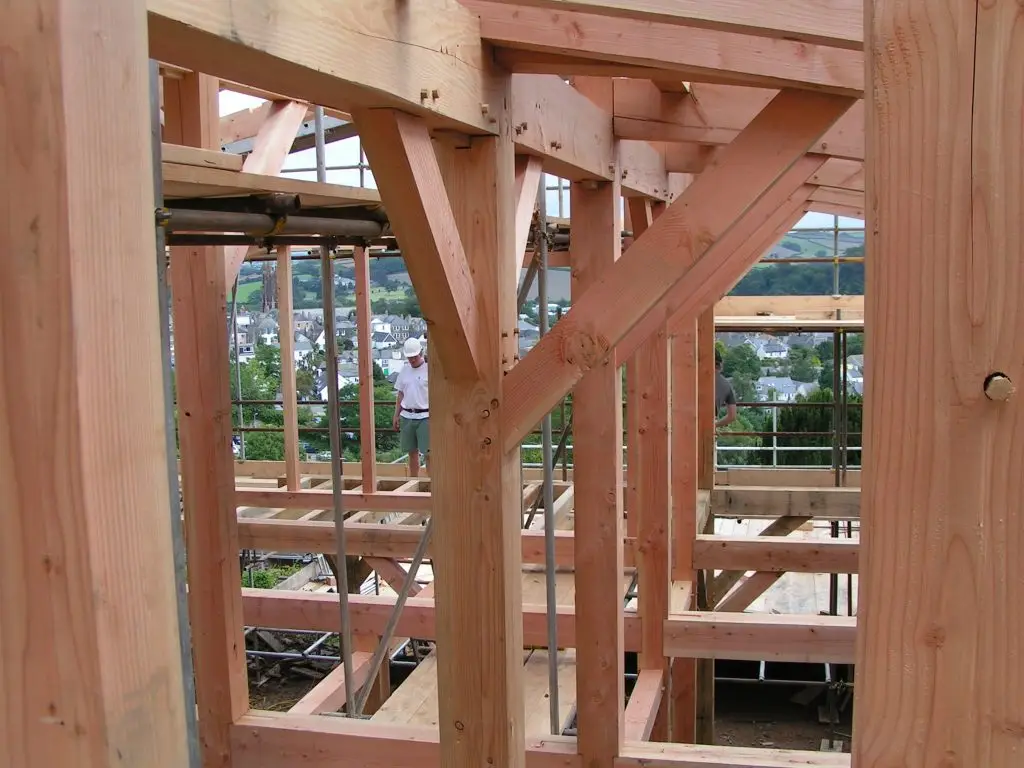
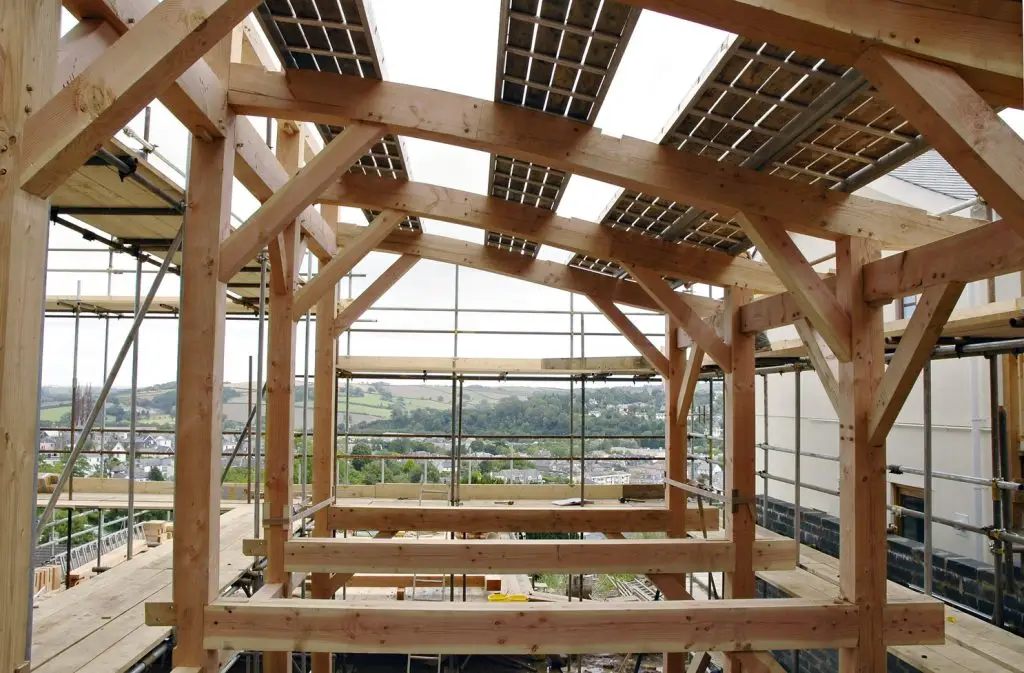
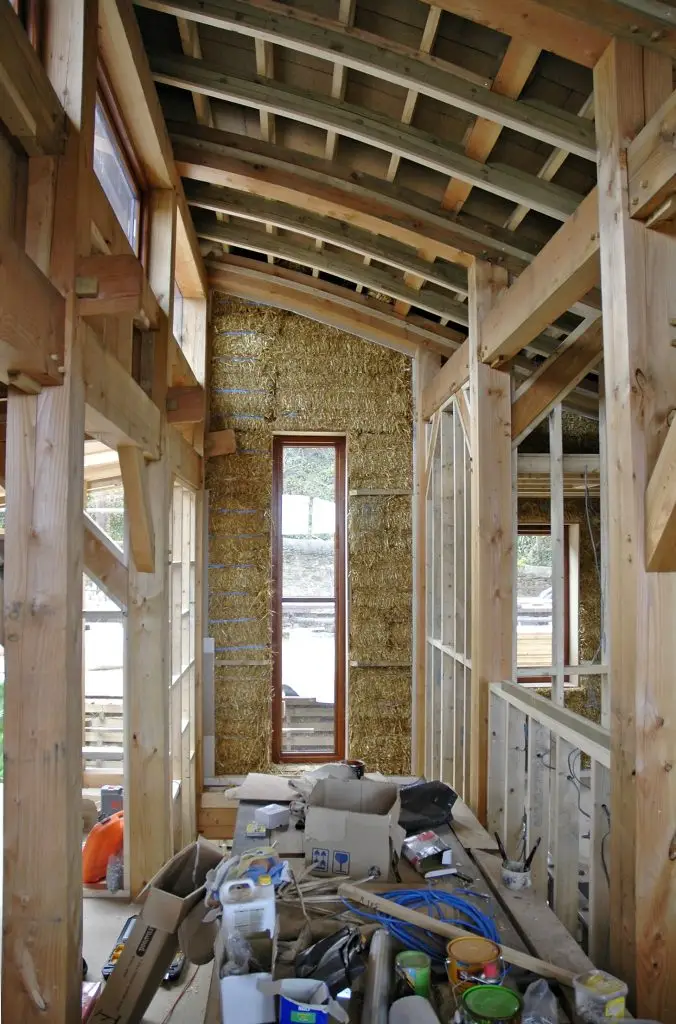
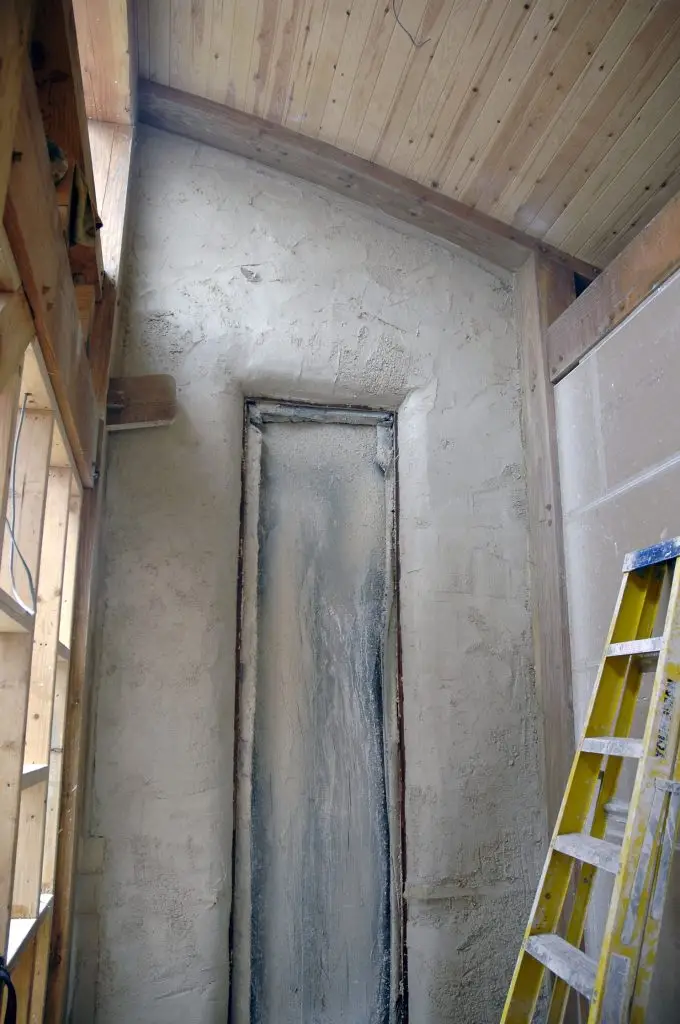
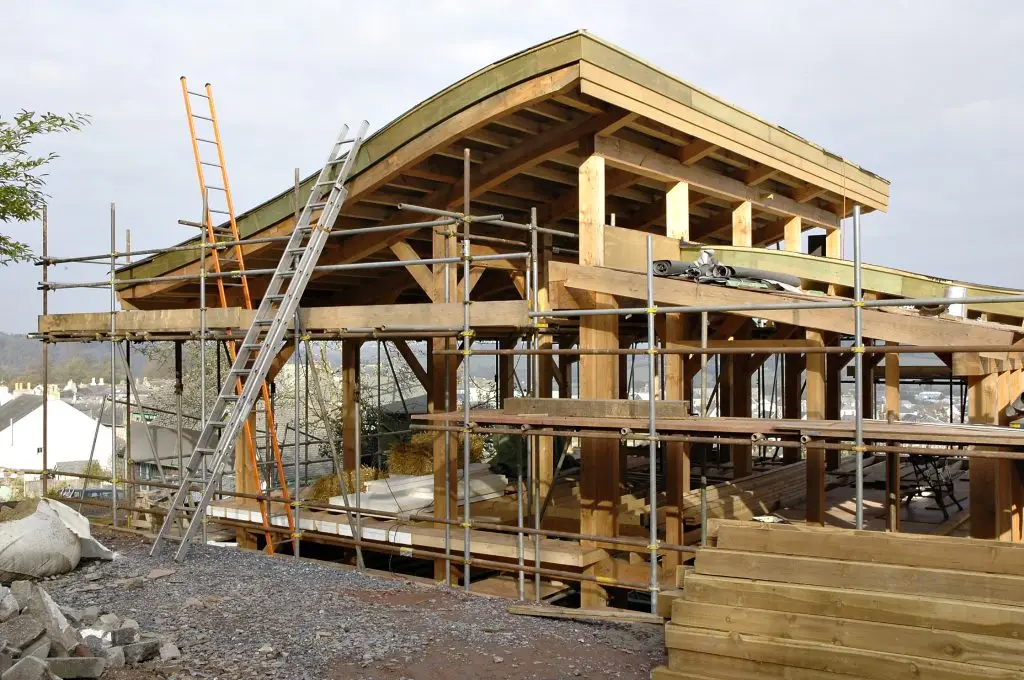
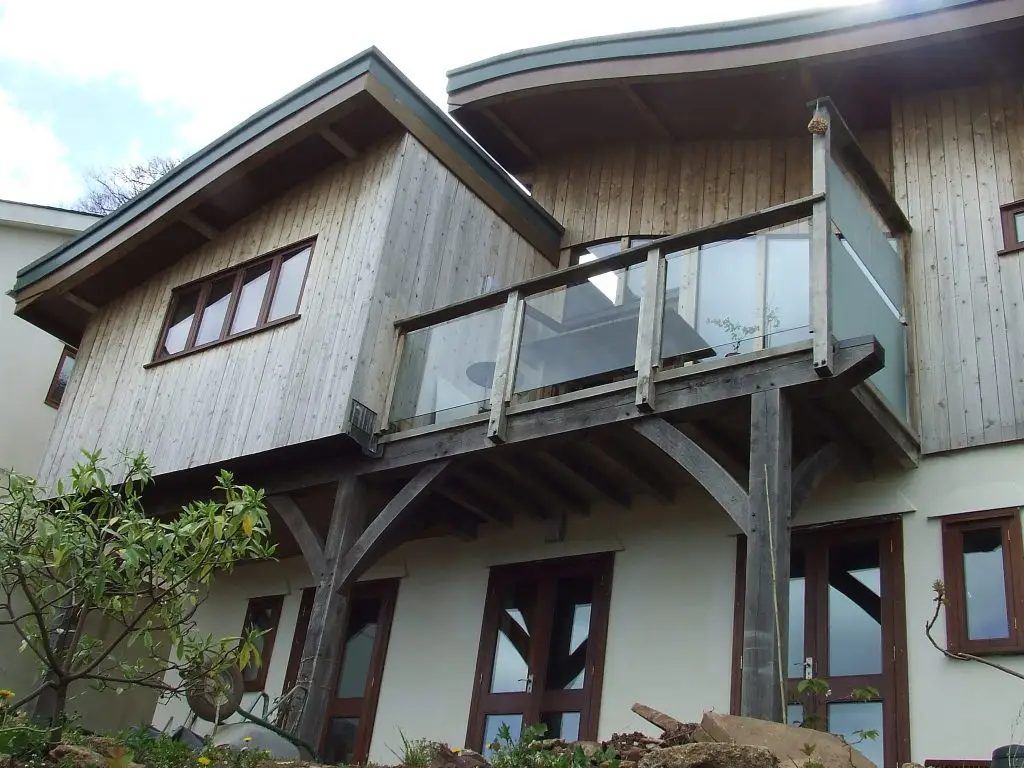
The important aspects of this construction was the minimal use of concrete, and the elevated suspended ground floor level providing a significant undercroft with plenty of airflow to safeguard the timber structure and straw bale from external water ingress from flood or foul weather. Early on in the design process we agreed that the straw bale walls were not to be a supporting element, rather, the braced primary frame would be internally exposed and support the bale walls over cantilevered beams at each floor level and support a simple ‘S’ curved mono pitch purlin roof structure. The bale walls are elevated from the floor levels by a low insulated timber wall frame to ensure protection from any internal flooding from burst pipes or broken washing machines that could cause catastrophic damage to the bale’s structural integrity. This low wall panel was designed to provide an easy access service void, housing the plumbing and electrical services. The floor joists and common purlins were sourced from conventional timber sections, cut and fitted on site by the builders carpentry team.
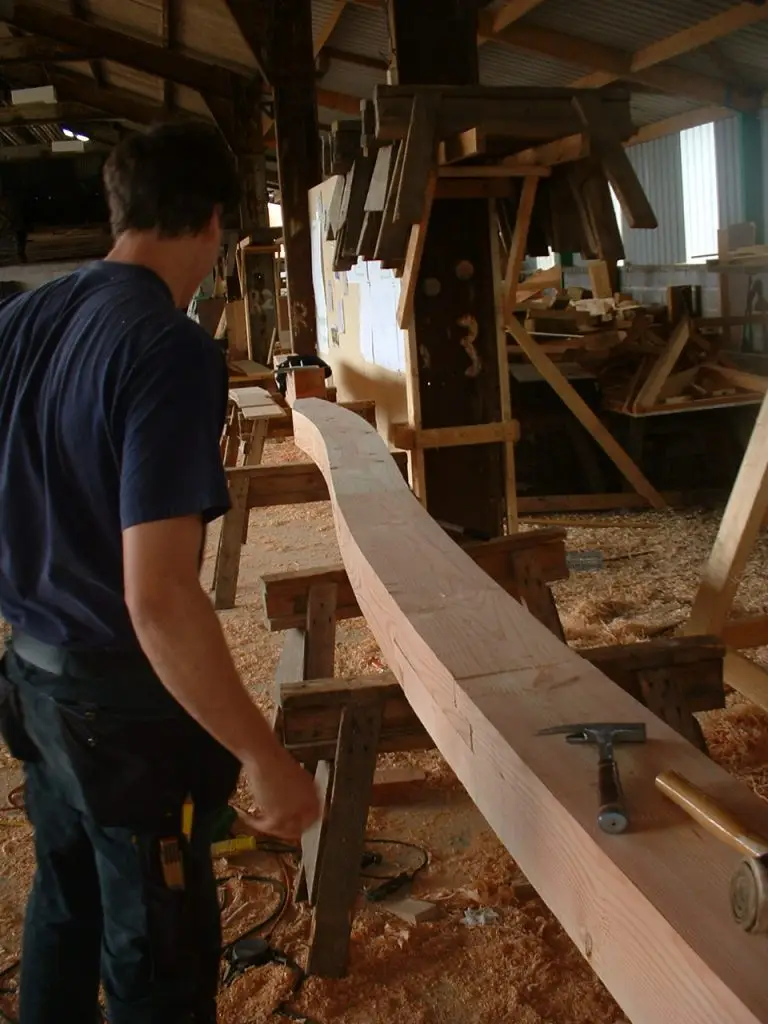
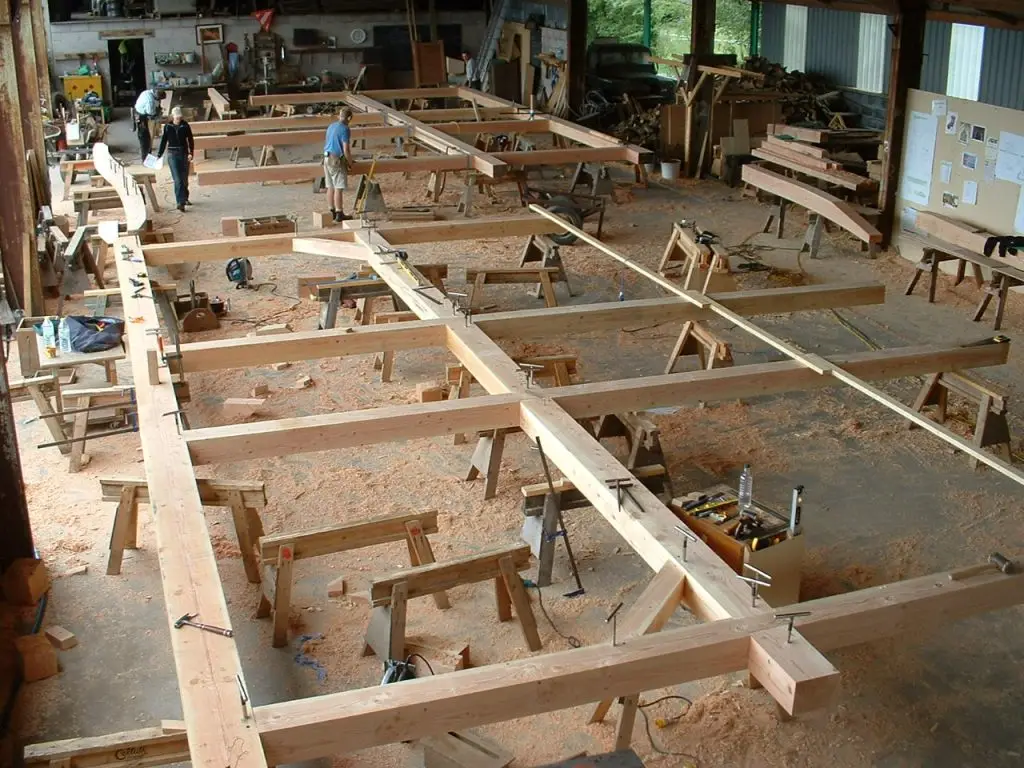
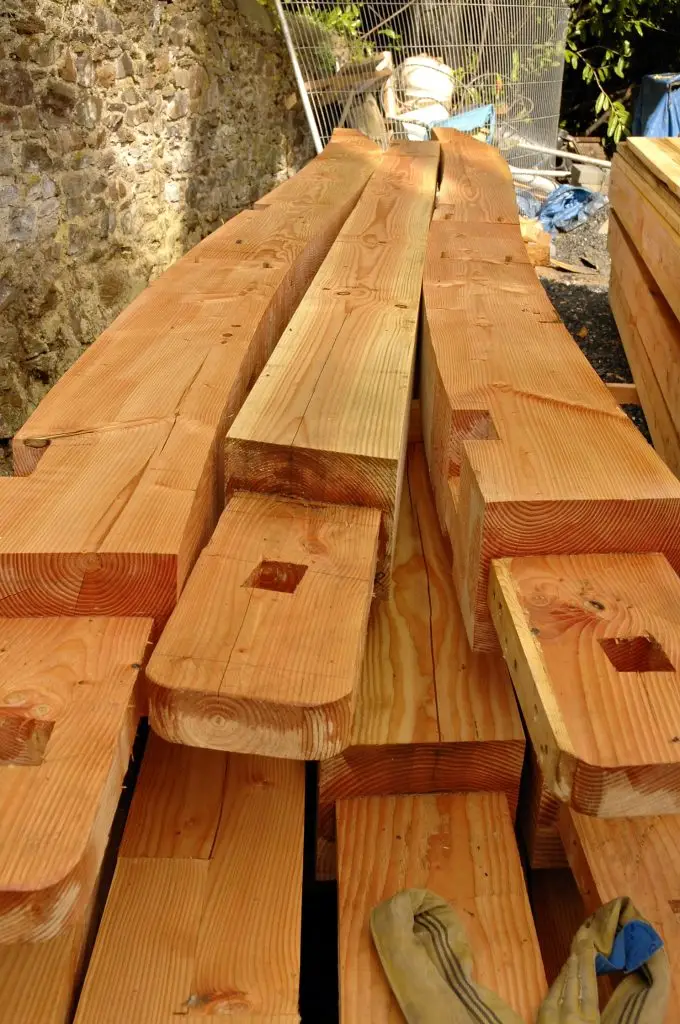
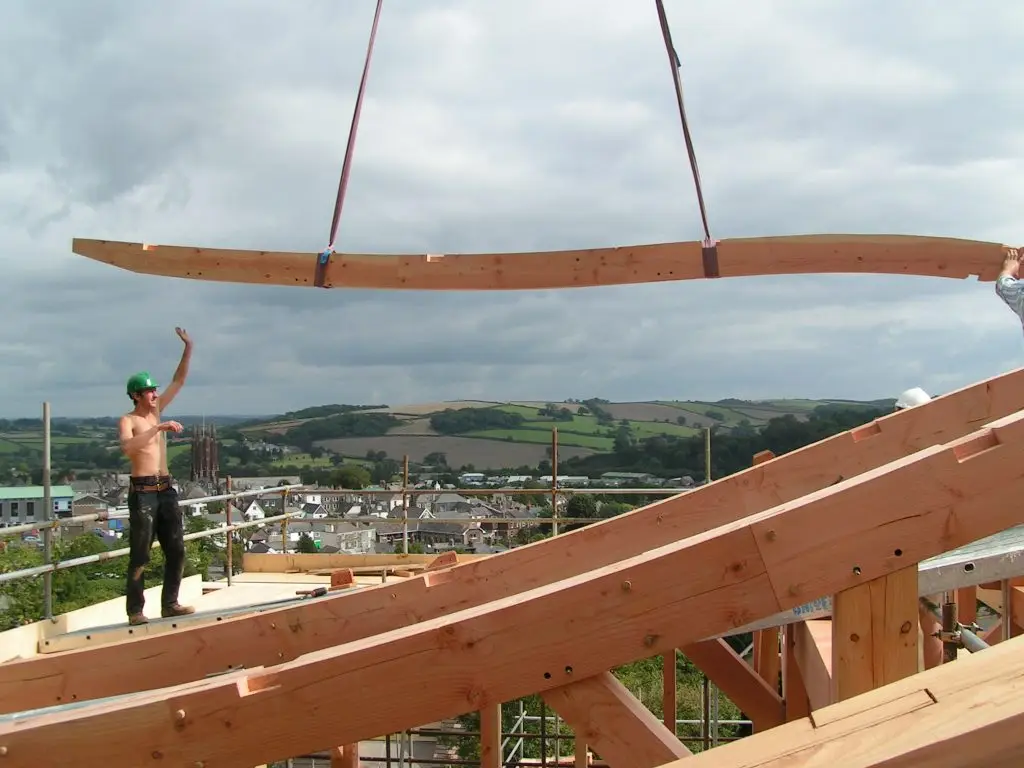
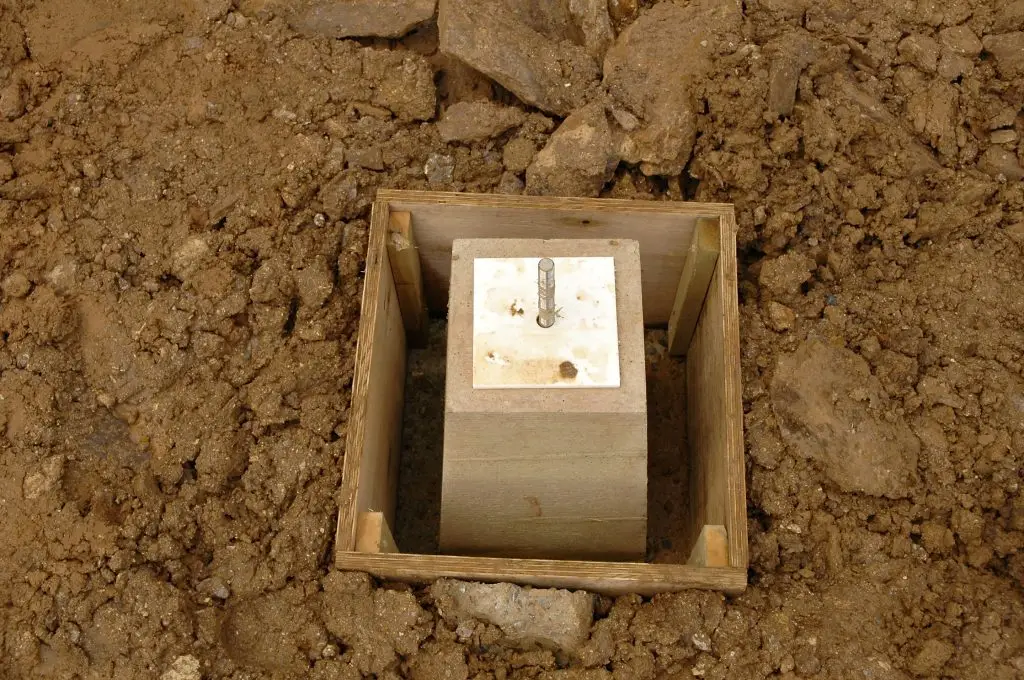
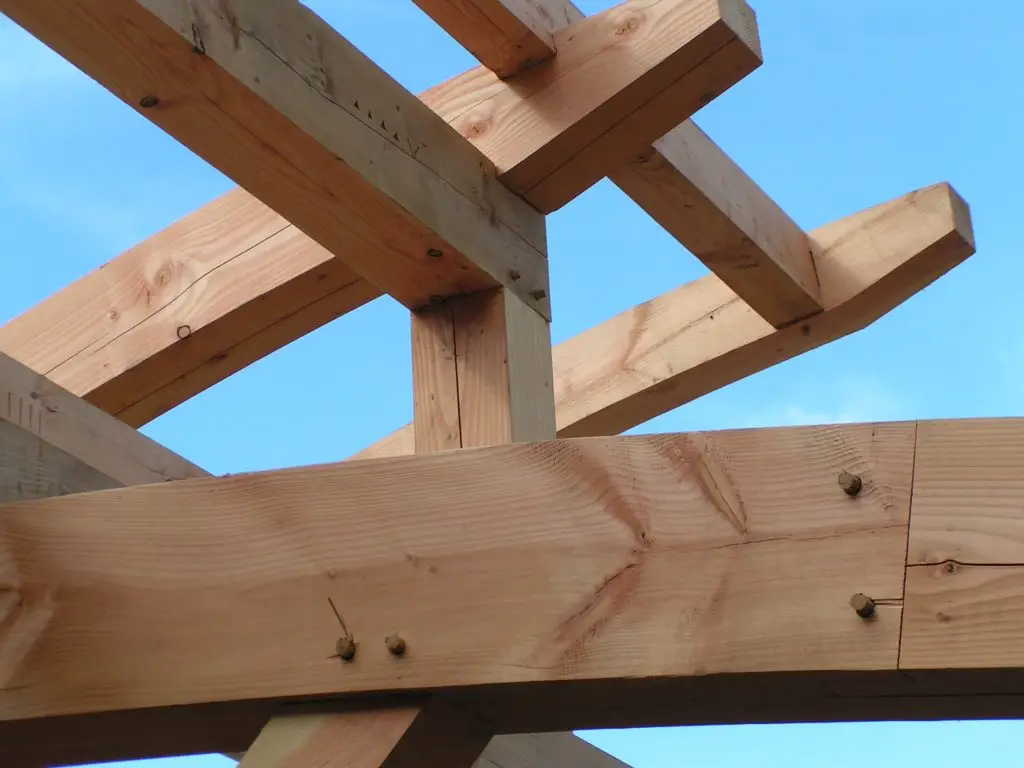
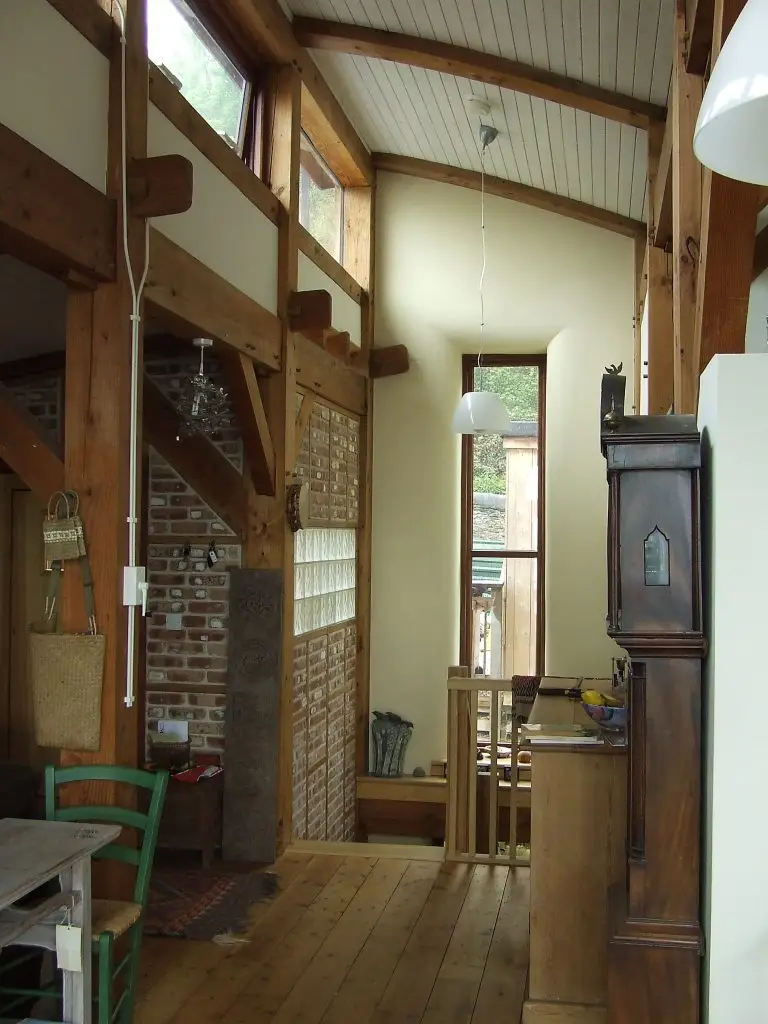
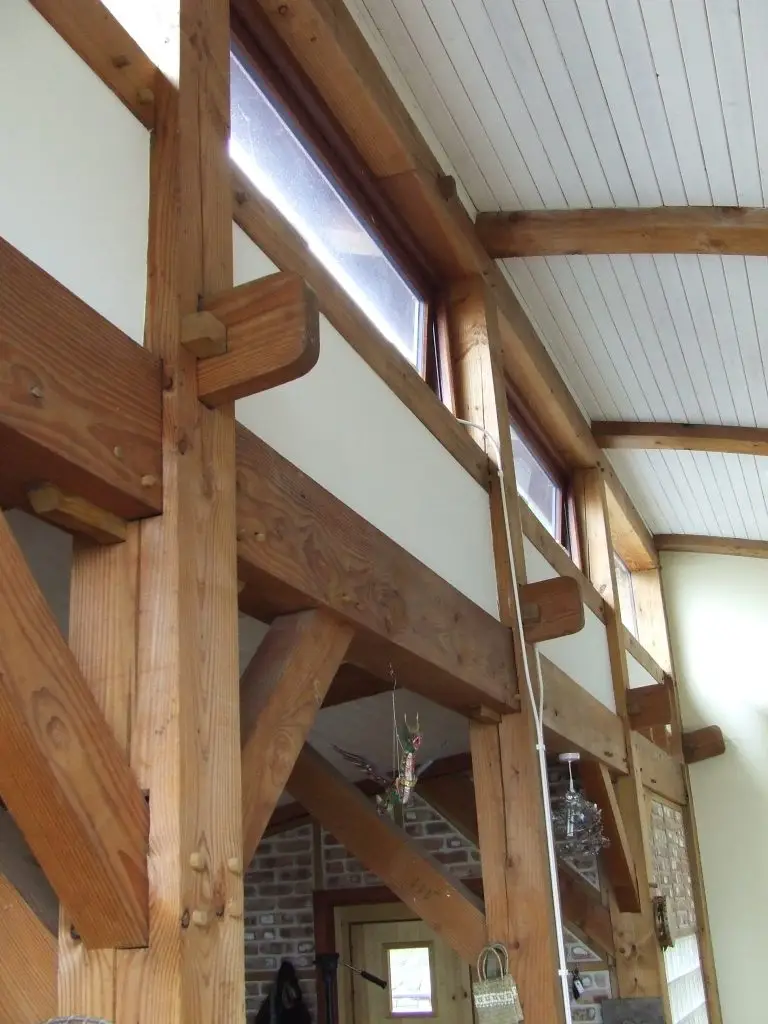
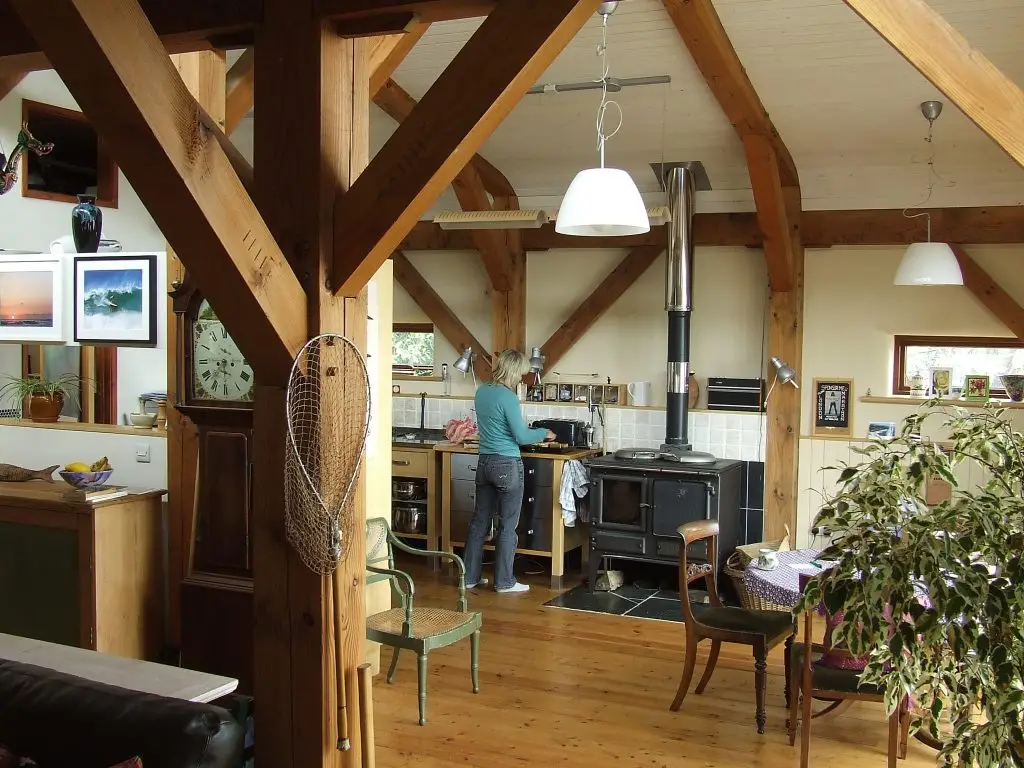
The resulting primary frame is elegant and efficient. It is supported at its base by very deep floor beams fitted to pyramidal staddle stones over micro-pile foundations. The primary frame features traditional oak pegged carpentry joints such as mortice and tenons and wedged through tenons where the tie beams are likely to be in tension under wind loads and the double curved ‘S’ shaped principal rafters that support the common purlin roof structure are jointed then shaped accurately from templates. These are visible within the building and add to the language of the frame design. The Douglas Fir frame has a planed finish and is oiled to protect its surface.